Essential DIY Tools Every Homeowner Should Own
You don’t need a garage full of expensive tools to tackle everyday jobs around your home.
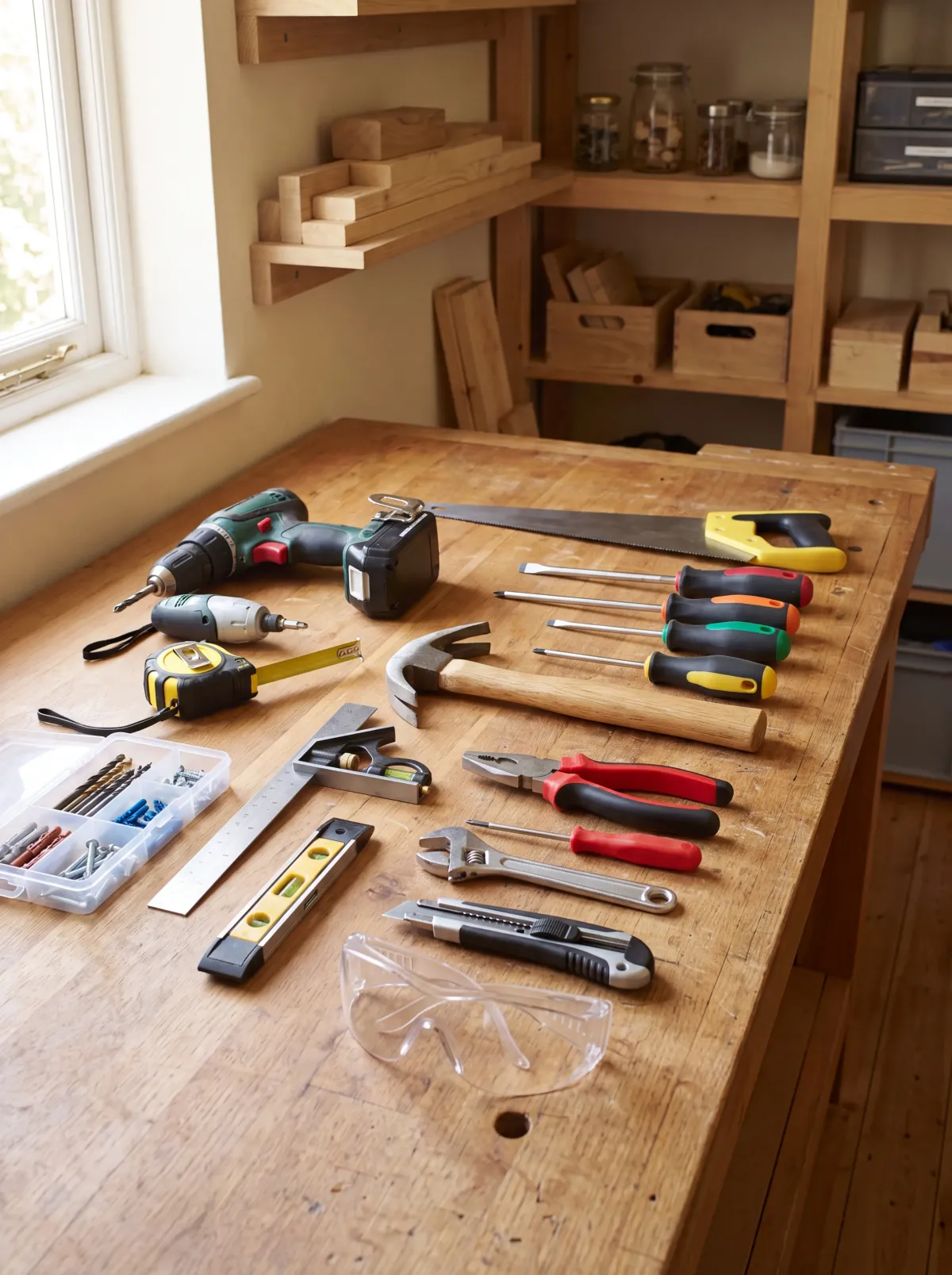
A relatively small toolkit can cover everything from hanging pictures and assembling furniture to making simple repairs and completing your first woodworking project.
The aim isn’t to buy every tool you might one day need. It’s to build a useful collection around the jobs you’re most likely to do.
Here are the tools that deserve a place in a practical starter kit, along with a few items you can wait to buy until a project calls for them.
Measuring and marking tools
Good DIY usually starts with accurate measuring.
A small error at the beginning of a job can become much more obvious once shelves, fixings or pieces of timber are fitted together.
Tape measure
A tape measure is one of the tools you’ll use most often.
A five-metre model will cover most household and workshop tasks without becoming bulky. Look for one with clear markings, a secure lock and a case that feels comfortable in your hand.
You’ll use it for jobs such as:
Measuring walls and furniture
Positioning shelves
Cutting timber
Checking whether something will fit through a doorway
Planning storage
Spacing hooks and fittings
Before cutting anything, measure again. Timber is easier to shorten than it is to lengthen.
Pencil
A standard pencil is often all you need for marking timber, walls and measurements.
Keep a pencil with your tape measure so you aren’t searching for one halfway through a job.
For rough timber, a carpenter’s pencil can be easier to hold and less likely to roll off the workbench.
Spirit level
A spirit level helps you fit shelves, pictures, cabinets and other items straight.
A compact level works well for smaller household jobs, while a longer one makes it easier to check shelves, worktops and wider surfaces.
Don’t rely entirely on the appearance of walls or ceilings. Older houses aren’t always perfectly square or level, so decide whether the object itself needs to be level or whether it should visually follow the surrounding features.
Combination square
A combination square helps you mark accurate 90-degree lines across timber.
It can also help check the depth of a cut, measure short distances and test whether corners are square.
It’s especially useful when you start building simple wooden projects.
Basic hand tools
Power tools can speed up a job, but simple hand tools still handle a large share of everyday DIY.
Claw hammer
A claw hammer can drive nails, remove them and help with light dismantling work.
A medium-sized hammer is more useful for general jobs than an oversized framing hammer.
Check that the head feels secure and the handle is comfortable. You’re more likely to control a balanced hammer than one that feels too heavy.
Screwdriver set
A basic screwdriver set should include flat-head and Phillips screwdrivers in several sizes.
You may also need Pozidriv screwdrivers, which are common on screws used in the UK. Phillips and Pozidriv heads look similar, but using the wrong driver can damage the screw head and make removal difficult.
A multi-bit screwdriver saves space, although individual screwdrivers can be more comfortable for repeated use.
Adjustable spanner
An adjustable spanner is useful for tightening and loosening nuts, bolts and some plumbing fittings.
It won’t replace a complete spanner or socket set, but it’s a good starting point for occasional jobs.
Adjust the jaws closely around the fitting before applying pressure. A loose fit can damage both the spanner and the nut.
Pliers
A basic pair of combination pliers can grip, bend and cut light wire.
Long-nose pliers are useful when you need to reach into a narrow space or hold a small item.
Pliers aren’t a replacement for the correct spanner or wrench, so avoid using them on nuts where they could damage the surface.
Utility knife
A sharp utility knife can cut packaging, carpet, thin sheet materials and sealant.
Choose one with a secure blade mechanism and replace dull blades rather than forcing them through material.
Always cut away from your body and close or retract the blade as soon as you finish.
Cutting tools
The right cutting tool depends on the material and the finish you need.
Handsaw
A general-purpose handsaw is enough for many simple timber projects.
It doesn’t need batteries, takes up little space and works well for occasional cuts.
Mark a clear cutting line, support the timber properly and begin with a few controlled strokes. Trying to cut too quickly often causes the saw to wander.
Junior hacksaw
A junior hacksaw is useful for cutting small pieces of metal, plastic pipe and thin fixings.
It’s inexpensive and easier to control in tight spaces than a full-sized hacksaw.
Make sure the blade faces the correct direction and has enough tension before you start cutting.
Jigsaw
A jigsaw isn’t essential on day one, but it’s often the first powered saw worth adding.
It can make straight cuts, curved cuts and cut-outs in timber or sheet materials. The result depends heavily on using the correct blade and supporting the material properly.
A jigsaw is useful for projects such as:
Shelves
Planters
Storage boxes
Serving boards
Simple furniture
Decorative shapes
Buy one when you have a project that genuinely needs it rather than because it looks useful.
A cordless drill and driver
For most homeowners, a cordless drill is the first power tool worth buying.
It can drill holes, drive screws and handle a wide range of repairs, installations and small building projects.
Drill driver or impact driver?
A drill driver is the better first purchase.
It can drill into timber, metal and masonry when fitted with the correct bit, and it can also drive screws.
An impact driver is designed mainly for driving screws and larger fixings. It’s useful for heavier construction work, but it doesn’t replace a general-purpose drill.
Many people eventually own both, but you don’t need both to get started.
What to look for
For general home use, pay attention to:
Battery voltage
Battery capacity
Chuck size
Adjustable torque settings
Hammer mode for masonry
Weight
Availability of replacement batteries
Whether the charger and battery are included
An 18-volt drill is a common all-round choice. Smaller 12-volt models are lighter and may be enough for furniture assembly and light household jobs.
A hammer setting is useful if you expect to drill into brick or masonry, although very hard materials may require a dedicated drill.
Choosing a battery system
Cordless tool batteries usually only work with tools from the same manufacturer and product range.
Before buying your first cordless tool, look at the other tools available within that battery system.
You might later want to add:
A jigsaw
An orbital sander
A circular saw
A work light
A garden tool
Sticking to one battery system can reduce the number of batteries and chargers you need.
That doesn’t mean you have to buy every tool from one brand. It simply makes sense to think beyond the first purchase.
Drill and driver bits
The drill itself is only useful when you have the correct bits.
A basic set might include:
Timber drill bits
Masonry drill bits
Metal drill bits
Screwdriver bits
Countersink bit
A magnetic bit holder
Check the material before choosing a drill bit. A masonry bit won’t give a clean result in timber, and a standard timber bit isn’t designed for brick.
Fixings and fastening supplies
A toolkit becomes much more useful when you keep a small selection of common fixings nearby.
This might include:
Wood screws in several sizes
General-purpose screws
Wall plugs
Picture hooks
Nails
Washers
Nuts and bolts
Cable clips
Small brackets
Don’t assume that one wall plug works in every wall.
Solid brick, plasterboard, blockwork and hollow walls require different fixings. The item’s weight also matters.
A light picture frame and a loaded kitchen shelf shouldn’t rely on the same type of fixing.
If you’re unsure what’s behind the surface, investigate before drilling.
Safety equipment
Safety equipment doesn’t need to turn a small DIY job into a major production.
It should match the work you’re doing.
Safety glasses
Wear eye protection when drilling, cutting, sanding or working with materials that may produce chips or fragments.
Ordinary glasses don’t provide the same protection as safety glasses designed for the task.
Dust protection
Cutting and sanding can produce fine dust.
For light work, a suitable disposable mask may be enough. More frequent woodworking or work involving hazardous materials may require better respiratory protection.
Open windows and use dust extraction where possible.
Hearing protection
Drills, sanders, saws and other power tools can be loud enough to damage your hearing.
Ear defenders or suitable earplugs are inexpensive and easy to keep near your tools.
Work gloves
Gloves can help when carrying rough timber, clearing debris or handling sharp materials.
They aren’t suitable for every task. Loose gloves can become caught in rotating machinery, so follow the tool manufacturer’s safety guidance.
First-aid kit
Keep a basic first-aid kit somewhere accessible.
It shouldn’t be buried at the back of a cupboard beneath the tools you’re trying to use.
Tools worth adding later
Once you’ve completed a few jobs, you’ll have a better sense of which tools will save you time.
Orbital sander
An orbital sander makes finishing larger wooden surfaces faster and more consistent.
It’s useful for shelves, planters, furniture and repainting projects.
For a single small job, sandpaper and a sanding block may be enough.
Clamps
Clamps hold materials in position while you drill, glue or assemble them.
Even two or three basic clamps can make woodworking projects easier and safer.
They’re particularly useful when building boxes, shelves and small pieces of furniture.
Stud and cable detector
A detector can help identify timber studs, metal and live cables behind a wall.
It should support careful planning rather than replace it. Detector readings can vary depending on the wall and device, so use them alongside other checks.
Socket set
A socket set becomes useful if you work on furniture, garden equipment, bicycles or fittings that use nuts and bolts.
Start with a modest set rather than buying a large collection containing sizes you may never use.
Folding workbench
A folding workbench gives you a stable surface and can hold materials while you cut, drill or sand.
It’s useful if you don’t have a permanent workshop and need to pack everything away after a project.
How to avoid overspending
Tool shopping can easily become a hobby of its own.
Before buying something, ask what job it will help you complete.
A few principles can keep your toolkit sensible.
Buy for the project in front of you
Choose a project, identify the required tools and fill genuine gaps.
This is usually better than buying a large kit because you think it may become useful later.
Spend more on tools you’ll use regularly
A tape measure, drill, screwdriver and level may see frequent use.
A specialist tool needed for one project may be better rented or borrowed.
Don’t overlook second-hand tools
Many hand tools have long working lives and can be bought second-hand.
Check for damage, missing guards, worn cables, loose handles or incomplete parts.
Be more cautious with used batteries and tools where the safety history is unknown.
Consider corded tools
Cordless tools are convenient, but corded tools can offer good value when portability isn’t important.
A corded sander or jigsaw may suit someone who only works near a power socket and doesn’t want to maintain another battery system.
Don’t buy a huge set for one useful item
Large tool sets can look like good value, but they often contain duplicate or low-use items.
A smaller collection of tools you understand and trust is more useful than a large box you rarely open.
A practical starter toolkit
You can handle many common jobs with the following:
Tape measure
Pencil
Spirit level
Combination square
Claw hammer
Screwdriver set
Adjustable spanner
Combination pliers
Utility knife
Handsaw
Junior hacksaw
Cordless drill driver
Basic drill and screwdriver bits
Selection of screws and wall plugs
Safety glasses
Dust protection
Hearing protection
You don’t need to buy everything at once.
Start with measuring tools, a few hand tools and a drill. Add cutting tools, clamps and other equipment as your projects become more ambitious.
Start with one real job
The best toolkit is the one that helps you complete useful work.
You might start by hanging a shelf, repairing a loose handle or building a planter. Each finished job teaches you how your tools work and which additions would genuinely help next time.
Once you’ve built a basic collection, you’ll be ready for a much wider range of projects around your home, workshop and garden.